Most Organizations Are Hierarchical. Here’s What Can Be Done Instead.


Following some notes on how to get involved, I want to dive into more depth about organizing. The first post was about organizing too, but, for someone who’s brand new, it often looks like activism: the tactics without the strategy. That’s fine; spontaneity is the lifeblood of any movement. Strategy, though, is a way to ensure that gains can be added to and protected, allowing for (at least in my conception) the bolstering of that spontaneity.
This kind of organizing often presupposes… organizations. I want to talk about what we should be focused on when joining, changing, or creating orgs, so that… they don’t suck, as–presently–many of them do.
I imagine what follows as a kind of schematic, a blueprint. This comparison gains its validity from seeing organizations as technology. Rather than a material piece of technology like a smartphone, I’m working with an expansive definition that includes tools more broadly. Social technologies like heuristics are one such tool.
This is meant to make it clear that organizations aren’t just abstract ways of shaping the world around us, but technologies handled by people and beholden to (at least some of) them.
While the solutions to the polycrisis aren’t purely about (even social) technology, relating to each other better can only be a boon to those efforts. Prefiguring, the “build” part of the process described in Finding Your People, is done in part by creating robust organizations.
Photo by Hichem Loualiche on Unsplash
To avoid the pitfalls of many organizing efforts (e.g. the ones linked above), non-hierarchical structures are needed that 1) prioritize non-coercive, non-domineering principles, and 2) enable positive versions of power-to (the ability to act) and power-with (the ability to act collectively, towards collective interest). That’s the aim: social technologies that allow for horizontal relations.
Onto the more schematic parts. At its base, there should be values that root the organization in a shared perspective. I like joy, autonomy, radically informed consent, cultivating individuality, and solidarity as mutually constitutive “non-negotiables.” They are defined as:
- Joy: Productivity, work, and formality should be engaged with a critical perspective, orienting towards prefiguration. As much as can be done and makes sense, these “building” efforts should create spaces of fun, play, and levity. The core intent with this is to question drudgery and the ways that it is experienced and distributed. This doesn’t mean negativity is avoided or discarded, but it is sharpened and aimed well, at the things that prevent joy. While it may not be possible to build lasting joy so long as the plantation stands, there is the possibility of respite in the warmth from it burning.
- Autonomy: If there are five different “units” or “scales,” and they are teammates, teams, section/wings, and wholes, they should be able to have independent operations. Imposition should not be a possibility, unless one defines imposition to be such in cases in responses to abuse, like when a group of abuse victims jump an abuser. I find that definition unhelpful, so I imagine imposition as having hierarchical power over people at the same scale or other scales.
- Radically informed consent: All decisions that include or impact someone should be made with that person 1) in that discussion/process and 2) having as much context and information as they need to be aware of the implications of the decision being made. Those who are impacted should make the decisions, so long as “impacted” doesn’t–again–lump in abusers with the abused.
- Cultivating individuality: Collective goals should never come at the expense of individual desires. Specifically, these organizations should never become alien forces in the lives of individuals, acting as an arbitrator that operates outside of the purview of the concrete people operating the mechanisms.
- Solidarity: These units should orient their work around common interests and affinities, made clear as often as possible (and especially in the process to join a unit). All of this should be seen as having to be built rather than assumed. The most marginalized should be centered, both in comparison to the society at large, and within and across the units. The work done should be distributed fairly, as well.
These values are the common tongue by which various organizations and units can communicate. This shared understanding is what allows them to do what they set out to do.
If these values are the foundation, the building blocks are teammates, roles & tasks, aims & domains, teams, assemblies/summits, alongside the areas, functions and committees. I’ll chart those out below:
- Teammates are individuals. They are a specific person that interfaces with everything else.
- Roles and tasks are how work is distributed within an organization, in ways that align with the values and aims of units across scales.
- Aims are the objectives of the units; it’s what the unit is working towards, across the short, medium, and long terms.
- Domains are the things a unit is responsible for, usually in relation to wider context.
- Teams are units that consist of multiple teammates.
- Assemblies/summits are multiple teams (or their delegates) coming together for shared interests.
- Areas, functions, and committees are ways that multiple units can come together to meet specific aims.
This allows people to accomplish things across scales of organization. This stuff is foundational for a non-hierarchical organization. Since the discussion is focused on social change, the organizations should orient around those goals. This broadly means that they should have and build capacity for–whether it is internally or with allies–care work, robust analysis, and effective action.
- Care work takes seriously the maintenance needed to uplift folks. It operates on a disability liberation frequency, leaning into things like healing circles, accountability circles, and meeting "non-organizational" needs that deal with the making and remaking of folks (e.g. childcare, food, emotional care).
- Robust analysis is building an understanding of what is being faced in the world and why. It’s part critical thinking, part knowledge, and part culture. Given that this is being discussed in the context of horizontal ways of relating, this analysis should catalyze autonomous & self-directed action, rather than make this-or-that organization indispensable to a movement. Organizations should organize themselves out of a role, in a sense, through things such as making sure other people understand how to do what they do, and not hyper-specializing.
- Effective action is being able to do what the org sets out to do, within the timescales that it sets out to do them. This implies strategy, campaigns, logistics/operations, and tactics.
All of these pieces work together, and prop each other up. They also imply a basic security culture. Pretty much any social change org that is directly effective or building towards effectiveness necessitates protection for the people in the organization.
This is worth an in-depth conversation, but basic things like not talking to state, corporate, and non-state reactionaries, being mindful of where and when certain information is shared, if at all, screening for new members, with proportional intensity to the openness of the organization, and not calling people feds or cops without proof.
It would be paired with collective discussion to establish those agreements, and training/collective study to inoculate folks against bad security practice.
These are all of the components for the organizational schematic; they can be put together in many ways. My proposed shapes are phantoms, networks, and fractals. The differences will be made clear, but the general idea is having multiple ways that groups can relate, while still aligning with the values presented.
Phantoms are the most ephemeral. They are temporary teams built for a specific goal. They may not even know about what other teams, especially other phantoms, look like. Actions for these groups are motivated by catalyzation, following a general flow of event → action → report-back → action.
Some event happens that motivates a team to act, that team talks about it with instructions on how to replicate the action with some ideological rhetoric to boot, and others pick up where they left off for their own context. This is a kind of stigmergic spread, inspired by social media trends. Actions follow a similar format, evolving as it spreads, until it saturates a space and wanes. The goal is to combine distributed intelligence through info posting, replicability, and inspiration.
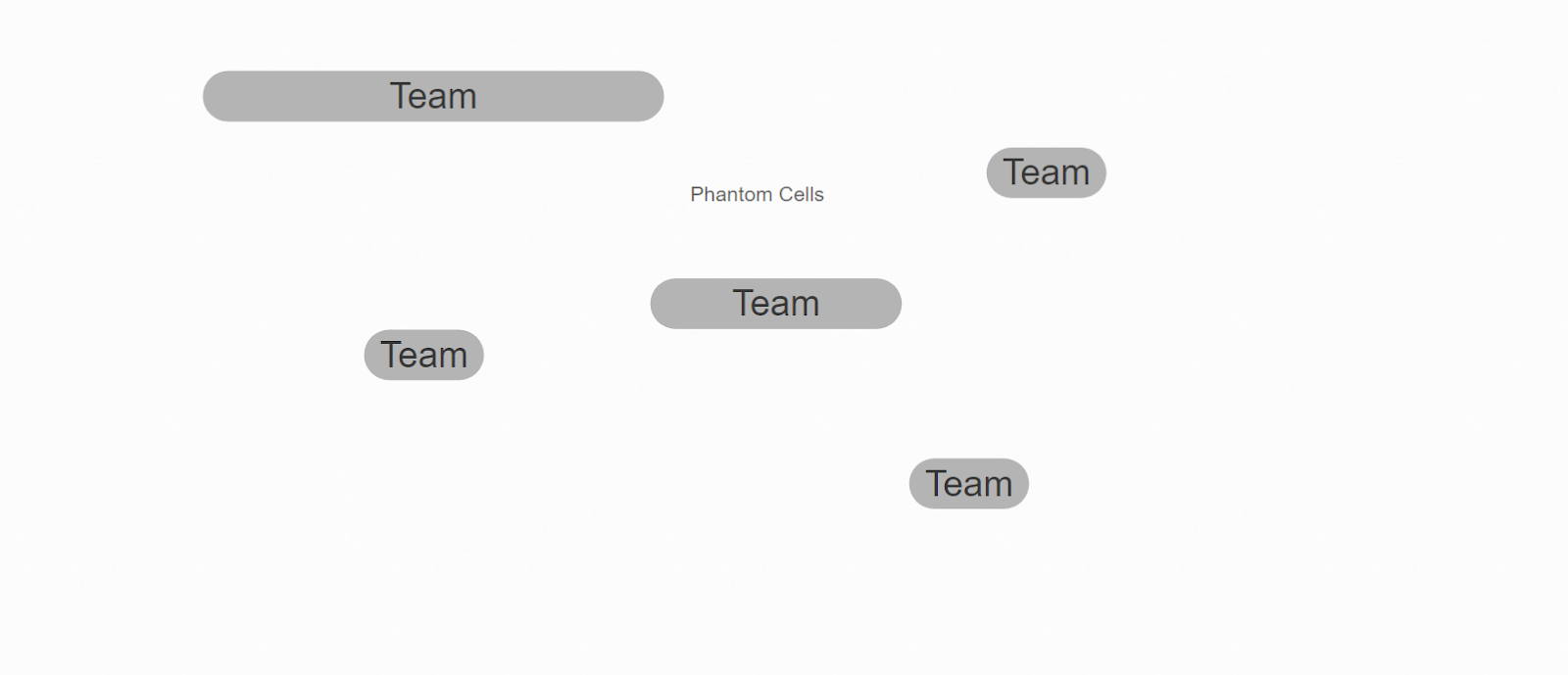
This mode is most useful for 1) finding concrete goals & replicable methods for connecting struggles in specific contexts, 2) creating compelling narratives around acting in line with those goals, and (3) encouraging easily replicable actions, consistent pressure, and sharing the results so that it spreads.
It allows for action to become highly distributed, where unity isn’t based on allegiance to specific organizations, movements, or formations. Operations of this sort are most useful for trying to achieve quick, decisive, small actions against a target.
Networks are groups of teams that consistently work together, where each team orients around having a broad set of skills. It’s like the party from a classic RPG. Each person has a specific core competency that they can be relied on for, and the combination of all the competencies allows for the team to face multiple kinds of challenges.
This allows the group to have a high level of self-sufficiency, achieving aims within their domain. Each team is animated by a general alignment on principles, vision, and values. Teams are also designed to link up with other teams, especially of this type, to accomplish bigger goals and complete bigger actions.
I also imagine teams “in the middle” to help coordinate resources between teams and provide additional, more specialized and contextual resources. Ideally, there is a rotation and continual morphing of the core so as to not become a failure point. This is why it’s important to have the teams be as self-sufficient as possible.
Every connection is an enhancement of capability, rather than a necessity. The relationships between the teams can be organized like a mesh network (many-to-many relationships between the teams), star (one-to-many-to-one relationships), and a chain/ring (one-to-one-to-one relationships), or some combination, based on the needs of the organization.

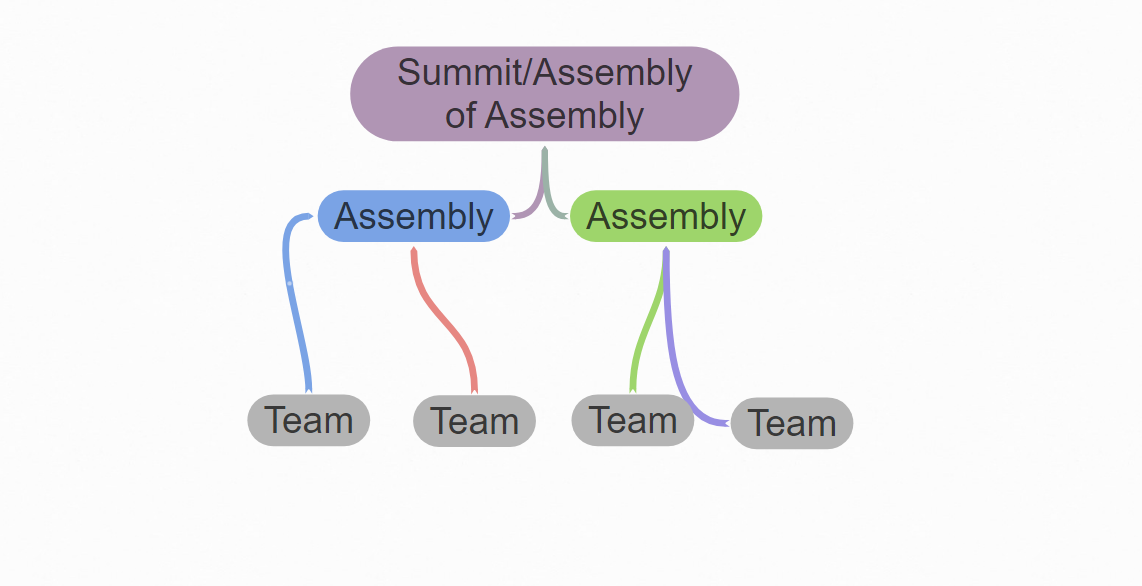
Fractals are rooted in confederation. It flips authoritarian federalism on its head by having power flow from the lowest level upwards, rather than the other way around. It starts at the team, and confederates upwards from there to encompass more general aims and domains, using assemblies, assemblies of assemblies, and summits.
This structure also operates on the principle of autonomous collaboration, where people who are impacted by and/or are doing a specific set of tasks are the ones to decide how that task is implemented. This is meant to minimize the amount of power-over within the structure, while still fostering modes of engagement between different scales of decision making.
At each level, there would be assemblies that provide the space to share information and discuss plans, and for potential working groups to meet and freely associate and dissociate as necessary. Decisions shouldn’t be made here at these higher levels of the hierarchy, as that can lead to a form of power that isn’t always deliberative.
Folks would execute whatever plans they see fit on the ground, based on self-organization, informed by the information that is shared within these more open, popular gatherings. The trust is put on folks to be self-directed around their needs, getting help and providing assistance in a mutualistic way.
These forms could also benefit from an intentional structure to gather information. This is called “intelligence” in the statist context, but we don’t have to use that language here. It’s just about getting information that facilitates successful completion of objectives. This can happen through methods from research, investigation, and espionage; the info should be pertinent, practical, and informative.
Alongside this gathering of information, there should also be safeguards in place to, at the very least, maximize the friction in reactionary forces doing the same kinds of work.
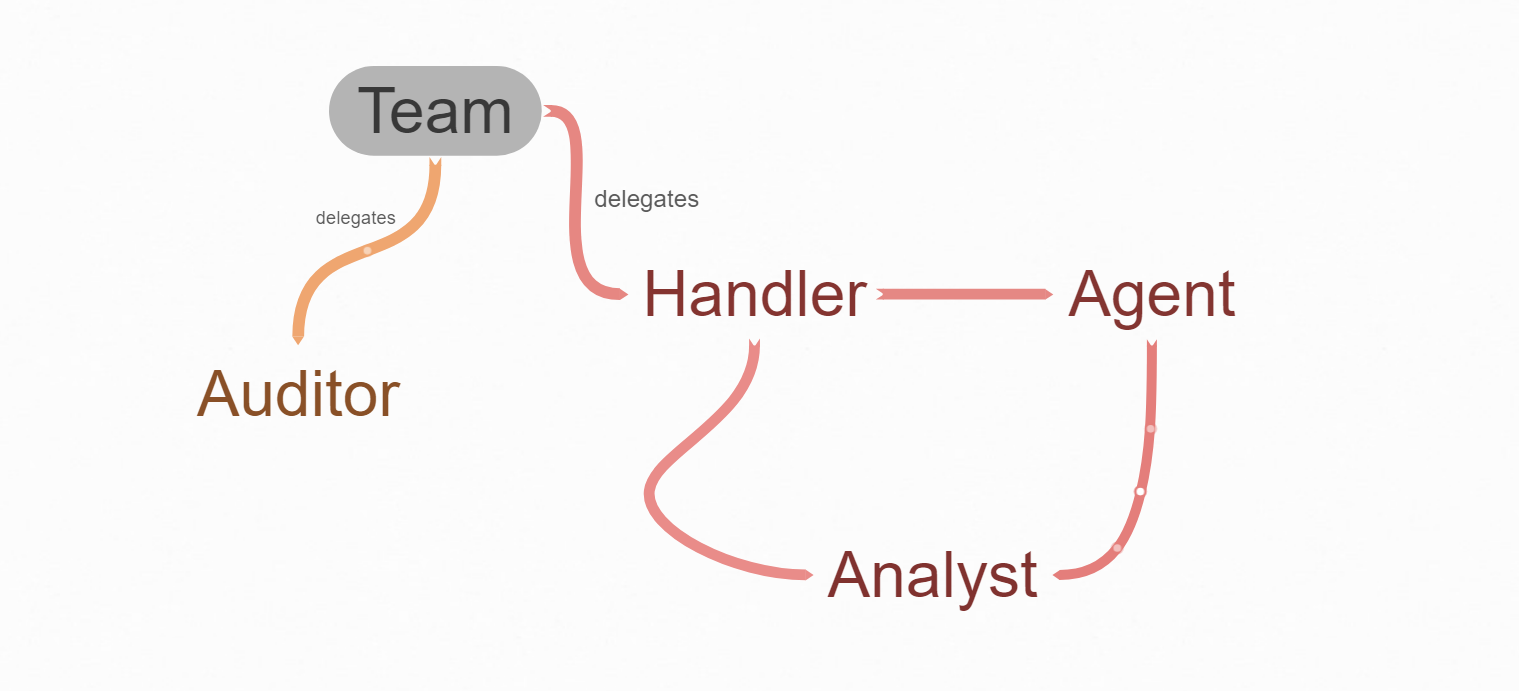
The structure would be that a specific unit delegates an intelligence handler to work within that unit’s domain. This handler is one part of an intelligence cell. The cell would be a compartmentalized team for the sake of mutual protection, containing a handler, analyst(s), and agent(s). Handlers are the cell coordinators, recruiting the other roles as they see fit.
They act as the direct link/contact to the agent on the ground/in the field, supporting them with whatever they need. Handlers also support analysts with collaborating on research work or anything that they need. Analysts are the folks who make the information gathered by the agents usable.
They sort and organize the information, making things like reports and presentations so that action can come from or be informed by the information. Handlers may support the analysts with those tasks.
Agents are the crux of this cell—they gather the intelligence. They should be a generalizing specialist, in the vein of the folks in the networks from earlier, where they understand the breadth of the context in which they act, even with a specialty in the type of intelligence they gather. For these purposes, there will probably be a combination of focus on open-source intelligence, signals intelligence, and human intelligence.
Finally, we have the auditor. They are also delegated by the unit (the one that placed the handler). This is a way to make sure there isn’t any tomfoolery happening within the cell—the auditor can look over any of the information within the cell, and compile an independent report for the sake of the unit of interest.
The basic intelligence process would go as follows: Information would be split or categorized into four main areas: strategic, campaign, logistic/operational, and tactical. For each of these levels, there would be a repeating loop process of setting goals for those areas, gathering the information, analyzing it, figuring out how to use it, and a method to evaluate the process. Information can be gathered by agents or anyone else in the organization, anonymously.
This helps bolster the capacity of information gathering. Of course, these cells would not be the only folks gathering information; the intent here is to have dedicated capacity for that, so as to have a more robust level of being informed, beyond what would be accessible otherwise.
It starts with asking what information is needed to achieve the unit’s aims. Then, questions arise about where that information is located. Received information should be judged on whether or not it is important, timely, and accurate/verifiable. That information can be packaged and disseminated, keeping the audience in mind so that they can understand it. Once the audience gets it, they can act and give feedback, starting the process over again.
These various forms, as depicted in the above diagrams, relate and can change based on what various organizations and contexts need. A good way to figure out what broad approach is useful is to think about how “open” the organization is, classifying it broadly under the labels of overt, covert, and clandestine.
Overt organizations act out in the open. They operate on “what you see is (mostly) what you get.” Phantoms might operate as front-facing aboveground collectives of folks who have a very specific focus, with the intent to popularize and virally spread action around that focus, through building (para)social relationships. Networks might make more intentional, long-term connections between cells, leading to a more tightly bound network.
This could look like the mesh model. Fractals might have highly accessible and legible teams and assemblies with centralized information pipelines, creating an easy way to get involved with the movement. This point is important, when we’re thinking about how to make the movement accessible.
Covert organizations act in secret, operating with plausible deniability. Phantoms might use mainstream channels to share their ideas but operate in a way that obscures their identities. Networks might relate using a star model, with many connections compartmentalized by those shared nodes.
Fractals might hide membership and focus on the intake process, because this formation is the most vulnerable to infiltration. It could even be that fractals aren’t useful outside of the overt context.
Clandestine organizations are fully underground. Phantoms might only spread action through hyper-encrypted or low-tech methods. Networks might have no awareness of who or what the composition is of other teams in the network, and any connections between cells might be mediated in ways that maintain anonymity and prevent infiltration.
Each form should see the others as providing something of value towards anti-authoritarian ends. In other words, fractals should not decry networks or phantoms for their seemingly chaotic structures or methods. Phantoms shouldn’t shit on the other two for not being effective enough. Effectiveness is based on (being honest about) what is being attempted as it relates to the outcome.
For the sake of (relative) brevity, I’ve kept things a bit abstract; the article relies on the reader’s experiences of being in or interacting with organizations, and any knowledge one has about how they function. If it were helpful, I can do a follow up, comparing and contrasting actually-existing orgs to shapes I’ve described. Let me know what you think!
Aligning people and actions across these horizontal forms will allow an ecosystem of forms that reinforces the ability for each to succeed. Overt groups can act as an auxiliary force for the covert and clandestine groups, and the covert and clandestine groups can create spaces for the overt groups to construct the world they would all benefit from.
By having values that are sound, exploring what organizations need to do, and creating structures that enable those ethics and principles to be realized, building organizations can allow folks to more easily accomplish social change.
⭑⭑⭑
An earlier version of this essay appeared on Dip’s personal blog.


